

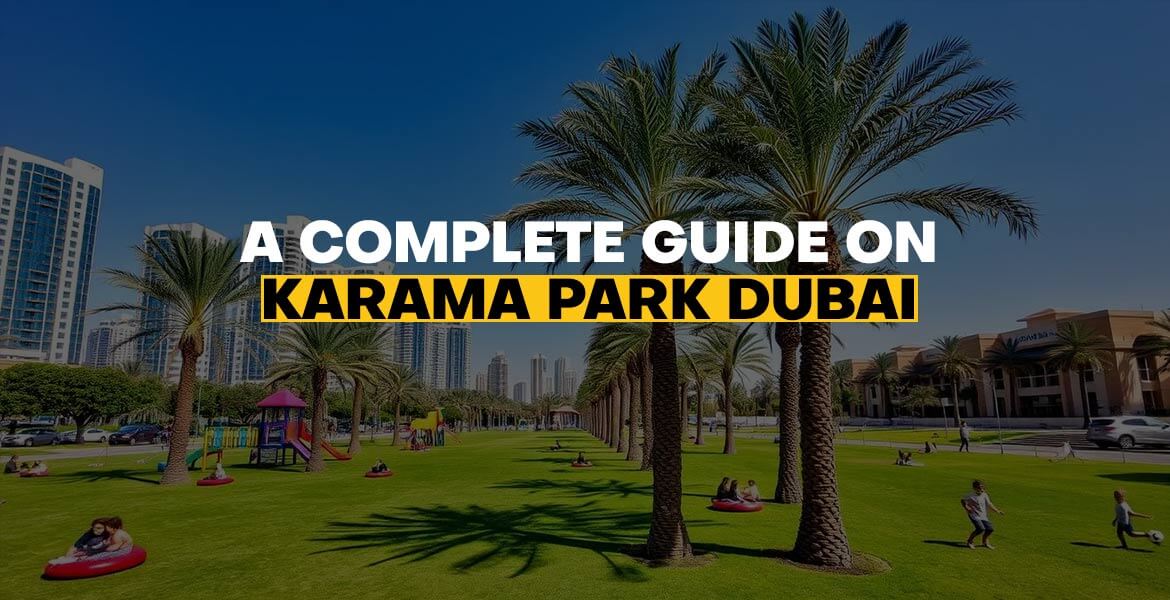
Al Karama Park is not the kind of Dubai attraction that appears in mostly Dubai itinerary. There is no record-breaking the world’s largest picture frame like dubai frame in zabeel park, no water fountain, no air-conditioned indoor activities. What it offers instead is something increasingly rare in dubai city, green spaces in Dubai is the presence of a Smart Sustainability Oasis, a solar-powered recycling centre installed by Dubai Municipality in partnership with Averda. For those who have already already visited the Burj Khalifa and the Dubai Mall, this compact neighbourhood park in al karama gives a different kind of insight into how the city works for the people who live in it.
The park occupies roughly 3.8 acres at the junction of 16B Street and 27B Street, directly opposite the LuLu Supermarket in Al Karama. It is managed by Dubai Municipality and has existed as a community green space for years, predating the wave of mega-projects that reshaped the city’s international image. Its significance lies less in what it contains and more in what happens within it cricket matches improvised between lamp posts, families picnicking on shaded lawns, children cycling along paved paths, and a steady rhythm of neighbourhood activity that continues from early morning until well after dark.
Table of Contents
Facilities & Activities
The park’s facilities are modest but functional, designed to serve the daily needs of the surrounding residential community. Understanding what is actually available helps set realistic expectations, especially for visitors accustomed to the scale and polish of Dubai’s destination parks.
Sports & Recreation
Cricket is arguably the most visible activity in the park. Informal matches take place on the lawns, often with makeshift wickets and equipment brought by the players themselves. The park also accommodates badminton, with players sometimes rigging nets between lamp posts, and football, which is popular among younger visitors in the afternoons and evenings. Basic cricket and badminton areas are among the park’s listed facilities, but these are not formal, lined, bookable courts in the way larger sports venues are. Bring your own ball, net, cones, mat, or resistance bands. Space is shared, so keep sessions compact and mobile.
For those seeking more structured exercise, the park includes a jogging track and paved walking paths suitable for light exercise. The paths are short, so serious runners typically prefer larger venues such as Zabeel Park or the Dubai Water Canal. Biking trails are also available, though the compact size of the park means these are best suited to children rather than adult cyclists covering distance.
Walking & Jogging
The park’s compact network of paved loops winds through pockets of greenery. It is ideal for unhurried walks, steady jogs, or light runs on consistently flat ground. Shade from trees and shelters breaks up the sun along much of the route, and path lighting supports after-dusk exercise. The most comfortable windows are still early mornings and the cooler hours after sunset. In hotter months, plan for short, repeatable efforts rather than continuous distance, and carry water. Humidity can push the perceived effort well above what your watch suggests.
Scale matters here: it is a neighbourhood park, not a distance venue. The perimeter loop is roughly 0.5 km, with short spurs that let walkers and runners build laps efficiently. It is useful for recovery runs, controlled intervals, and stroller-friendly fitness rather than long tempo work. If you want continuous mileage without counting dozens of laps, many runners link from Karama to nearby Zabeel Park, about 1.5–2 km away, then switch to its broad, purpose-built perimeter track of roughly 4.3 km. That combination delivers an easy shake-out from Karama, a structured main set at Zabeel, and a gentle cool-down back, while keeping you on flat, well-maintained surfaces.
Children’s Play Areas
The playground is one of the park’s primary draws for families. It includes swings, slides, climbing frames, and safe rubber flooring, with fenced areas designed for younger children. The equipment is well maintained and suited to toddlers and primary-school-age children rather than teenagers. Parents can supervise from nearby shaded benches, which are positioned around the play zones. Approaches are paved, so strollers roll straight in.
Heat dictates timing. Aim for early mornings or late afternoons in the cooler months, and after sunset in summer. Equipment can get hot under direct sun, so check surfaces before use. Weekday visits are typically calm and, outside community events, the play areas rarely feel overcrowded. Weekends, especially evenings, bring a livelier crowd, but queues for equipment are still manageable by Dubai standards. Older children often last longer if you pair a playground stop with free play on adjacent lawns or move on to a larger municipal park later in the day.
Picnic Spots & Relaxation
Al Karama Park is built for unfussy, bring-your-own picnics rather than elaborate spreads. Multiple lawn pockets give small groups their own patch of grass, while benches and shaded gazebos scattered through the grounds make it easy to rotate between lounging and people-watching. Mature trees cast generous shade through much of the day, which is the real comfort factor here when temperatures climb. Expect an urban soundtrack and a relaxed, local vibe rather than sweeping vistas or seclusion.
Timing is the difference between a tranquil hour and a crowded one. Early mornings and the last light before sunset are the sweet spots; benches and gazebos go first on weekend evenings. In the cooler months, the lawns are ideal for lingering; in hotter months, plan short stints in deep shade and avoid the midday peak. Lawns are irrigated regularly, so a waterproof picnic mat or lightweight chairs are smarter than towels. If quiet is your priority, set up along the park edges farthest from play areas and main roads.
Stock up at the supermarkets and cafés just outside the park instead of hauling provisions across town. Keep picnics simple. Open flames are restricted to designated barbecue zones in Dubai, and small inner-city parks like this typically do not offer them. If grilling is essential, shift to larger parks that do. As with all Dubai municipal parks, expect family-first rules, no alcohol, no shisha in public recreational areas, and pets are not permitted.
Sports & Exercise
Al Karama Park suits everyday movement rather than organised sport. There are no lined, bookable courts in the formal sense; instead you get small lawns, basic cricket and badminton areas, and short interlinking paths that lend themselves to light jogs, bodyweight circuits, stretching, and casual games. Expect neighbourhood pickup activity quick five-a-side on the grass, badminton rallies with portable nets, impromptu cricket with cones marking a boundary, and occasional outdoor yoga or bootcamp meetups convened by residents. Bring your own equipment, and keep sessions compact because space is shared.
Plan around heat and crowd rhythms. Dawn and the hour after sunset are the most comfortable training windows. Late afternoons and weekend evenings draw families, which means slower lanes on paths and less uninterrupted lawn for drills. In the hotter months, cap efforts and prioritise hydration. In the cooler season, you can string together steady laps of the internal walkways and finish with mobility work under the shade. Footing is mostly paving and grass, not a cushioned track, so choose footwear accordingly. If you join a game near play areas, use soft balls.
If you need distance running or formal court time, pair an easy warm-up here with a short hop to Zabeel Park’s perimeter track or book an indoor facility nearby. For travellers seeking a low-key, equipment-light workout woven into a local neighbourhood vibe, Karama’s pocket park delivers exactly that.
The Vintage Clock
A vintage-style clock stands as a quiet landmark within the green space. It is not a major attraction in its own right, but it contributes to the park’s slightly retro, neighbourhood-character feel, contrasting with the glass-and-steel aesthetic of newer Dubai developments. It is the kind of detail that rewards a slow walk rather than a dedicated trip, and it fits the park’s overall role as a slice of older Dubai that still works for the people who live there.
Smart Sustainability Oasis
This facility accepts 18 types of recyclable materials, including paper, cardboard, plastic, metal, glass, used clothing, fabric waste, rubber, leather, wood, electronic waste, and batteries. The centre is equipped with smart bins that monitor capacity levels, audio devices that broadcast thank-you messages to users, and screens displaying environmental awareness content. It operates around the clock. For visitors interested in sustainability initiatives, this is a small but genuine example of how the city integrates environmental infrastructure into everyday community spaces.
Events & Seasonal Programming
Al Karama Park’s role expands considerably during certain periods of the year, particularly during Ramadan, when it becomes a venue for the Ramadan Street Food Festival. This festival, which has run for several years and expanded with each edition, transforms the park and surrounding streets into a hub of food stalls, live entertainment, and community gatherings.
The festival typically runs from mid-February to mid-March, aligning with the Ramadan calendar. It features more than 100 restaurants serving dishes from South Indian, Asian, and locally inspired cuisines, with food prices starting from as little as AED 5. The event is spread across two main zones — Flavour Lane and Culinary Crossroads at Karama Park — connected by a walkable food trail. Live entertainment includes storytelling, live music, tanoura performances, and children’s shows, with the main stage in Karama Park hosting programming until 11 pm on weekends. A dedicated carnival area offers classic games such as ring toss, can knockdown, duck fishing, and basketball shooting. Entry to the festival is free.
For experienced travellers, the main trade-offs are crowds and circulation. Expect heavy footfall from sunset to late, with lawn seating filling quickly and stroller traffic around the stage. If you prefer space for photos and shorter food lines, target Sunday to Wednesday and arrive 20–30 minutes before the first set. For maximum atmosphere, pick Thursday to Saturday and embrace the bustle. Driving is possible but parking around 16th/27B streets saturates early. Riding the Metro to Oud Metha, BurJuman, or ADCB and walking is usually quicker. Dress modestly, avoid eating in public before iftar, and ask before photographing families. These courtesies matter here.
The park has also hosted other community events, including Eid celebrations with children’s activities and cultural gatherings organised in partnership with local institutions. These events are typically announced closer to their dates, so check Dubai Municipality channels or local event listings for current information.
Best Time to Visit
Dubai’s climate is the single most important factor in determining when Al Karama Park is enjoyable. The comfortable season runs from November to March, when daytime temperatures typically range from the low 20s to high 20s Celsius, and evenings are cool enough for extended outdoor activity. During these months, the park is at its liveliest, with families, sports groups, and casual visitors making use of the space throughout the day and into the evening.
From April onwards, temperatures rise sharply. By June, daytime highs routinely exceed 40°C, and outdoor activity becomes genuinely uncomfortable, if not unsafe, during daylight hours. Visitors during the summer months should limit park visits to early morning or after sunset. The park remains open, but the experience is a different one — quieter, more subdued, and dominated by those who have no alternative but to be outdoors.
Within the comfortable season, the best times for different activities vary. Early morning, from around 6 am to 9 am, is ideal for jogging and walking, before the heat builds and while the park is still relatively peaceful. Late afternoon, from around 4 pm onwards, brings families and children to the playground areas. Evening, from around 6 pm until 10 pm or later, is when the park is busiest, with cricket matches, social gatherings, and the general hum of community life.
Accessibility
The park is largely flat and paved in key areas, which makes it navigable for visitors with limited mobility or those using wheelchairs. The walking paths are wide enough for comfortable passage, and the main entrances are step-free. Some grassy areas may be harder to navigate. The park lacks some of the accessibility infrastructure found in larger, more modern Dubai parks, such as dedicated accessible toilets or tactile paving.
Public toilets and drinking water fountains are limited. Visitors requiring facilities may need to use those available at the nearby LuLu Supermarket or other commercial establishments in the immediate vicinity. This is a practical consideration for families with young children or visitors planning extended stays.
There are no on-site cafés or restaurants within the park boundary, except during special events. This is not a significant limitation given the location. Al Karama is one of Dubai’s most densely packed dining districts, with hundreds of restaurants and cafés within walking distance. The area is particularly known for its South Indian, Pakistani, Filipino, and pan-Asian food, ranging from budget-friendly eateries to more established favourites. Visitors can easily combine a park visit with a meal before or after.
The park is generally safe and clean, with regular municipal maintenance and security patrols. Pets are not permitted inside the park. No alcohol, no shisha, no feeding birds or stray cats, and no littering.
Nearby Attractions
Al Karama Park’s location makes it a convenient stop for visitors already exploring the older, more established parts of Dubai. The park is a short drive or metro ride from several attractions that, together with Karama itself, offer a counterpoint to the city’s better-known modern districts.
Zabeel Park, one of Dubai’s larger and more feature-rich public parks, is nearby and offers cycling tracks, boating, and extensive picnic areas that Al Karama Park does not. The Dubai Frame, the iconic picture-frame-shaped observation tower, sits within Zabeel Park and is visible from parts of Al Karama. Visitors interested in the contrast between Dubai’s older residential neighbourhoods and its newer architectural landmarks may find it worthwhile to pair a visit to Al Karama Park with a trip to the Dubai Frame.
The Karama Market, also known as Karama Shopping Centre, is a short walk from the park and houses hundreds of shops selling fashion, souvenirs, accessories, and electronics. The market area is known for its street art, with large murals by local and international artists decorating the walls of 18B Street and surrounding lanes. This makes the walk between the park and the market visually interesting as well as practically useful for those looking to shop.
For visitors interested in Dubai’s cultural and historical layers, Al Karama’s position in Bur Dubai places it close to the Dubai Museum, the Al Fahidi Historical Neighbourhood, and the textile and spice souks along the creek. These areas, like Al Karama Park itself, offer a version of Dubai that exists alongside — and sometimes in spite of — the city’s rapid modernisation.
Plan Your Visit
- Address: 33 20B Street, opposite LuLu Supermarket, Al Karama, Dubai; near Al Mankhool Road
- Entry fee: Free, no ticket required
- Opening hours: : 6:00 AM–10:00 PM daily. In practice, it is freely accessible from early morning until late evening.
- Nearest metro: Oud Metha (Green Line), about 6 minutes on foot; BurJuman (Red/Green interchange) and ADCB also within walking distance depending on route
- Parking: Paid public parking in surrounding streets, AED 4 per hour; free on Sundays and public holidays; spaces fill quickly on weekends and evenings. RTA app for payment. BurJuman Mall parking is a short walk.
- Facilities: Playground with swings and climbing equipment; basic cricket and badminton areas; jogging track; shaded seating; open lawns; Smart Sustainability Oasis recycling centre; vintage clock. Public toilets and water fountains are limited.
- Activities: Walking, jogging, informal sports, family picnics, children’s play, occasional community events
- Best time to visit: November to March. Early morning for exercise, late afternoon for families, evening for social activity. In summer, early morning or after sunset only.
- Events: Ramadan Street Food Festival, typically February–March; occasional community and Eid events
- Nearby: Dubai Frame and Zabeel Park; Karama Market and street art; Bur Dubai’s historical districts and creek-side souks
- Rules: No alcohol, no shisha, no pets, no feeding birds or stray cats, no littering. No barbecue in the park itself.